
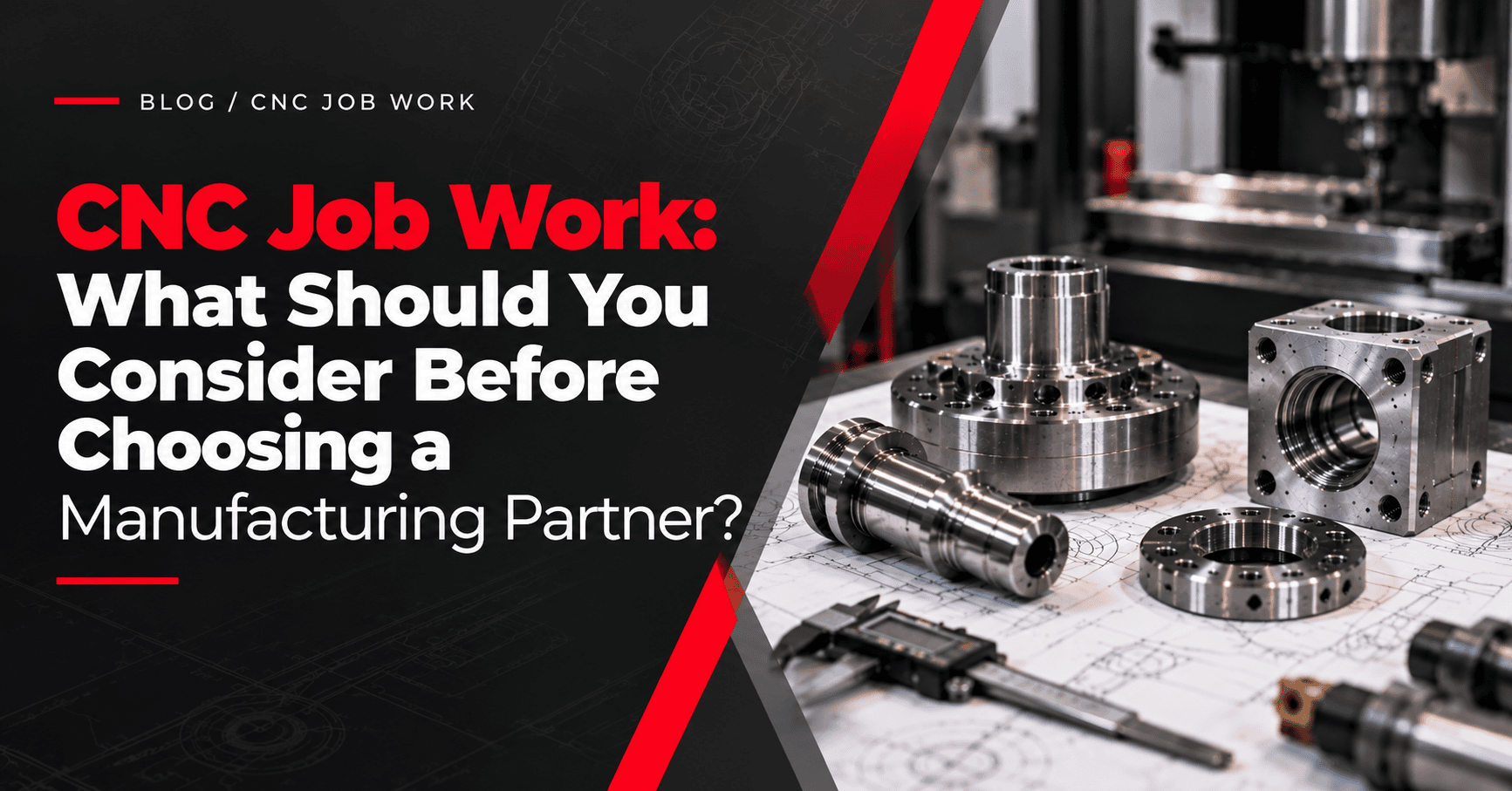
When a company needs machined components, the decision is not simply about finding a machine shop with the right equipment. The supplier must understand the engineering drawing, component requirements, production quantity, machining process and quality expectations.
This is where CNC job work becomes important. By working with an external CNC machining partner, companies can get components manufactured according to their drawings and specifications without necessarily carrying out every machining operation in-house.
However, choosing the right partner requires more than comparing quotations. Understanding manufacturing requirements, evaluating process suitability and establishing clear quality expectations can help avoid unnecessary delays and production difficulties.
What Is CNC Job Work?
CNC job work is a manufacturing arrangement in which a customer outsources machining operations to a supplier who produces components according to the customer’s engineering drawings, specifications and agreed requirements.
The work may involve CNC turning, VMC machining, HMC machining or VTL machining, depending on the component’s geometry and manufacturing requirements.
CNC job work can support prototype development, small production batches and repeat component manufacturing. The appropriate approach depends on the component design, material, dimensional requirements, production quantity and available machining processes.
For the customer, the objective is not merely to get a component machined. It is to obtain a component that meets the agreed technical and quality requirements.
When Do Companies Need CNC Job Work Services?
Companies may consider CNC job work when their internal manufacturing capacity is limited, a particular machining process is unavailable in-house, or they need external support for a specific component or production requirement.
Common situations include:
1. Additional Machining Capacity
CNC job work provides flexible machining support to meet fluctuating production demands and supplement customers’ in-house capacity whenever their machines or resources are fully occupied or unavailable.
2. Specialised Machining Requirements
Companies may outsource components that require a suitable machine or machining process that is not available within their existing manufacturing setup.
3. Prototype Development
CNC job work can support prototype development by producing components for initial evaluation before committing to larger production quantities.
4. Economical Manufacturing
Outsourcing machining operations can also be a more economical option than in-house manufacturing in certain situations. It can help customers optimise costs and utilise their existing resources more efficiently, depending on their production requirements and available facilities.
5. Early-Stage Machining to Minimise Material Rejection
Outsourcing rough machining operations directly at the forging or casting supplier’s facility can help identify material defects, such as cracks, blowholes and porosity, at an early stage.
This approach can help avoid unnecessary investment in further machining of defective components. It may also reduce material wastage, processing costs and transportation costs when defects are identified before components move to subsequent manufacturing stages.
The decision to outsource should consider the complete requirement, including technical suitability, production planning, quality expectations, delivery commitments and communication with the supplier.
What Should You Check Before Selecting a CNC Job-Work Partner?
Selecting a suitable CNC job-work partner begins with understanding whether the supplier can evaluate and manage the actual requirements of the component.
1. Understanding Engineering Drawings and Specifications
An engineering drawing communicates the information required to manufacture a component. It may include dimensions, tolerances, material specifications, surface finish requirements, geometric features and other technical instructions.
These specifications form the basis for determining the manufacturing requirements and expected characteristics of the finished component.
2. Suitability of Machines and Machining Processes
Different components require different machining approaches. Component size, geometry, accessibility of features and the operations involved influence machine selection and process planning.
For example, CNC turning is generally suitable for components with rotational features. VMC and HMC machining can be used for different milling, drilling and related operations, depending on the component and machine configuration. VTL machining may be appropriate for certain larger-diameter rotational components.
The final selection depends on the actual drawing, component dimensions, material and manufacturing requirements.
When evaluating a supplier, check whether its available machines and processes are suitable for the components you need to manufacture.
3. Tooling and Workholding Considerations
Tooling and workholding are important parts of the machining process.
The cutting tool must be suitable for the material, operation and required features. Workholding must locate and secure the component appropriately throughout machining.
Poorly planned workholding can contribute to vibration, component movement, dimensional variation or deformation in certain applications. Tool selection and condition can also influence surface finish, machining stability and tool life.
A suitable machining approach therefore considers not only the machine but also how the component will be held, machined and checked.
4. Quality Inspection and Measurement
Quality requirements should be understood before production begins.
The inspection approach depends on the drawing, specified tolerances, component features and customer requirements. Relevant dimensions and critical features need to be checked using suitable measuring or inspection equipment.
For repeat production, consistent methods of measurement and appropriate process controls help assess whether components continue to meet the specified requirements.
Customers should clarify applicable inspection requirements and documentation expectations with the supplier before work begins. Any required material verification, traceability or inspection records should be agreed according to the job specification.
5. Prototype and Batch Production Requirements
Production quantity influences planning, tooling decisions, setup effort and the approach used for manufacturing.
Prototype work may require additional evaluation to establish a suitable process. Batch production may place greater emphasis on repeatability, setup consistency and inspection throughout the production run.
Before placing an order, communicate the expected quantity, whether future repeat orders are anticipated, and any specific requirements for samples or first-piece approval.
A clear understanding of production expectations helps the customer and supplier plan the work more effectively.
Why Does Communication Matter in CNC Job Work?
Even when a supplier has suitable machining equipment, unclear communication can create avoidable manufacturing problems.
Before work starts, the customer and supplier should establish a common understanding of:
- The latest approved engineering drawing and revision.
- Material requirements and component specifications.
- Critical dimensions and tolerances.
- Surface finish and other applicable technical requirements.
- Required quantities and production stages.
- Inspection criteria and documentation.
- Delivery expectations and any agreed approval stages.
If the drawing changes after manufacturing has started, the effect on the machining process, existing components and delivery schedule should be evaluated before proceeding.
Clear communication helps reduce ambiguity and supports a more controlled manufacturing process.
Common Considerations When Outsourcing CNC Machining
Outsourcing CNC machining can support manufacturing operations, but several issues deserve attention during supplier evaluation and order planning.
Selecting a supplier based only on price: A quotation should be evaluated against the technical requirements, inspection expectations, delivery terms and scope of work—not price alone.
Providing incomplete drawings: Missing dimensions, unclear material information or unspecified requirements may lead to delays and clarification requests.
Discussing inspection only after production: Critical features and acceptance requirements should be established before machining begins.
Ignoring repeatability: For recurring orders, the supplier’s approach to process consistency and inspection is important.
Changing requirements without formal clarification: Drawing revisions and specification changes should be communicated and approved through an agreed process.
These considerations apply to both prototype development and batch production. The level of planning required will depend on the complexity and risk associated with the component.
How to Prepare Before Sending a Component for CNC Job Work
A well-prepared enquiry helps the supplier understand the requirement and assess the work more effectively.
Before requesting a quotation, consider preparing the following information:
- Engineering drawing: Share the latest approved drawing with readable dimensions, tolerances and relevant notes.
- Material details: Specify the required material and grade, where applicable.
- Quantity: State the prototype, sample, batch or recurring production quantity.
- Technical requirements: Identify critical features, surface finish requirements and any special manufacturing instructions.
- Quality expectations: Communicate inspection, traceability and documentation requirements where applicable.
- Delivery requirements: Share the required delivery date and any relevant production milestones.
If some information is not yet finalised, identify it clearly so that the supplier can raise questions before committing to the manufacturing plan.
This preparation supports a more useful technical discussion and helps establish realistic expectations on both sides.
Cenvision’s Approach to CNC Machining and Job Work
Cenvision Technocrats Private Limited is a Pune-based company providing CNC machining and component manufacturing support for engineering applications.
Its capabilities include CNC job work, CNC turning, VMC machining, HMC machining, VTL machining, prototype development, batch production, tool room and fixture development, and inspection and quality control.
The company works with customer drawings and specifications to address component manufacturing requirements across industries including Oil & Gas, Aerospace, Defense, Valves, Railway, Energy and General Engineering.
Cenvision is ISO 9001:2015 certified and serves customers across India, with exports to the United States and the Middle East.
For a CNC job-work requirement, the engineering drawing, component specifications, quantity and quality expectations provide the starting point for discussing the appropriate manufacturing approach.
The suitability of a particular process depends on the actual component and its requirements. Technical details should therefore be reviewed before confirming the manufacturing plan.
Frequently Asked Questions About CNC Job Work
1. What is CNC job work?
CNC job work is the outsourcing of component machining to a supplier who manufactures parts according to the customer’s engineering drawings, specifications and agreed requirements.
2. What information is required to request a CNC job-work quotation?
Typically, the supplier needs an engineering drawing, material details, required quantity, applicable tolerances, surface finish requirements and delivery expectations. Additional information may be necessary depending on the component.
3. Can CNC job work be used for prototype and batch production?
Yes. CNC job work can support both prototype development and batch production. The appropriate process and planning depend on component complexity, production quantity, technical requirements and repeatability expectations.
4. How do I choose a suitable CNC job-work supplier?
Evaluate whether the supplier has suitable machining capabilities, understands engineering drawings, can address the required quality and inspection criteria, and can communicate clearly about production planning and delivery.
5. Why are drawing specifications and inspection important in CNC job work?
Drawing specifications communicate the component’s required dimensions, material and other technical characteristics. Inspection checks whether the finished component meets the specified requirements. Both contribute to clear expectations and effective quality control.
Conclusion
Choosing a CNC job-work partner is a technical and operational decision. Machine availability matters, but so do drawing specifications, process planning, tooling, workholding, inspection and communication.
When these requirements are understood and discussed before production begins, customers and suppliers can establish clearer expectations and a more suitable manufacturing approach.
For companies seeking CNC machining support, the first step is to communicate the component requirements clearly and evaluate whether the supplier’s capabilities match the job.
Looking for CNC Job Work Support?
Have an engineering drawing, prototype requirement or batch production enquiry?
Share your component details with Cenvision Technocrats Private Limited to discuss your CNC machining requirements and the appropriate manufacturing approach.
Every Component Carries Our Reputation.